So Far Gone
Jess Walter’s story about a retired newspaper reporter / aspiring writer who gets yanked out of his remote and somewhat primitive living situation leaves this reader with a sense of uneasiness. The book reveals multiple levels of emotional and intellectual dysfunction, in both individuals and society, and has no satisfying solution.
The story ripples outward into society at large, calling into question many of our cherished institutions and beliefs, such as work, family, religion, and altruistic aid for each other. Character arcs suggest not only individual transformation, but the shifting ground under which characters build the foundations of their lives.
Regression to the Mean
This story may illustrate the original meaning of the phrase coined by a statistician: ”regression to the mean.” Originally proposed to derogate the mundane, regression literally meant to revert to some previous state. Given the predominant belief back then in the continual perfection of species through evolution, reversion meant going backwards to a less perfect state. Outliers on the positive tail, i.e. those taller, healthier and smarter, would inevitably produce offspring less tall, healthy, or smart.
We now realize that this effect, regression to the mean, does not exhibit some nefarious natural law, but is merely an artifact of selection effects. Indeed, the term’s precise meaning refers only to a mathematical technique of fitting a linear relationship to a group of points by minimizing their collective distance from that regression line. However, the term still carries its derogatory connotations for the popular mind.
Given the current belief that society is not progressing, but in fact degrading, regression takes on a different meaning. Going back suggests returning to a purified state, unadulterated by modern consumerism, commercialism, and power politics. The hero of Jess Walter’s story undertakes such a task, retreating from a crazy world into the sanity and peace of the wilderness north of Spokane, Washington.
The popular and lay use of that well worn statistical phenomenon can reassure the reader that society is self-correcting, and that extremes will be punished and herded back into the mass, the ’one sigma” group that makes up the bulk of the bell curve. That comfort rests upon the belief in inexorable progress, a concept we now find difficult to accept.
If society is indeed degrading and evolution knows nothing of perfection but is merely an ad hoc conglomeration of whatever works, this tendency to lop off outliers takes on an new dimension. No longer just a ”one step back, two steps forward” dance with random chance, this effect may actually reinforce the decline, and hasten the nose dive.
It also illustrates a system resistant to change. While that may be fine for benign and stable civilizations, when they become self destructive and begin to undermine their own foundations, carrying on as usual does not offer much comfort. This theme runs through Jess Walter’s novel.
Discomfort
Perhaps the novel leaves me dissatisfied because of my identification with the protagonist, who has dropped out of the craziness to retreat to an heirloom property in the woods. Although he is initially ill equipped to meet challenges of marauding raccoons and the prospect of generating his own electrical power, he does procure the minimal amount of technology to survive, namely an air-powered pellet gun for the critters and solar panels for the juice.
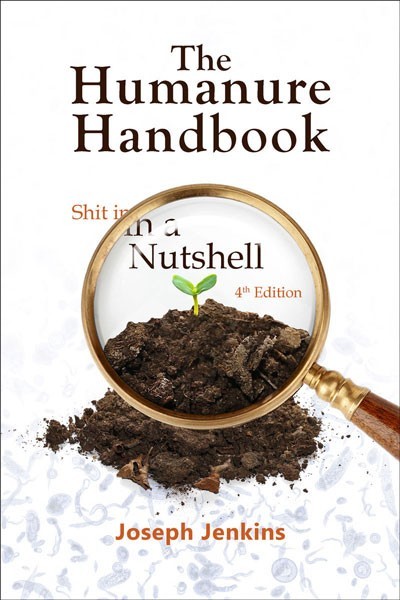
Other attempts to adapt are not so logical or successful. He still relies on purchased groceries, snack food, canned goods, and other highly processed food. (Read Sandor Katz's book on how to preserve food via fermentation.)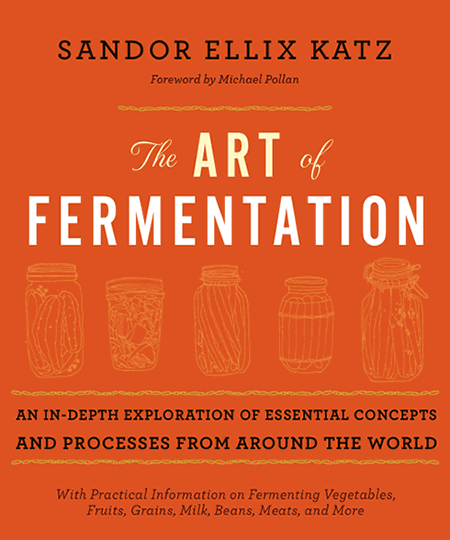 He mentions refrigeration and its demands upon a solar power system, which suggests that he hasn’t fully adapted to living off the grid. He tries to build a composting system for his human waste, but still relies on an outhouse pit toilet. These tactics reflect a character, and perhaps the author, who still struggles to create a coherent and self-sustaining lifestyle without standard fixtures of modern society. (See Joe Jenkins' website for a simple and effective means to handle human waste.)
These attempts, haphazard and incomplete, coincide with most peoples’ understanding of what lies in store for someone who rejects modern norms. The picture looks primitive and bleak. No showers means a smelly body. Old cars mean breakdowns and inconvenience. Lack of a telephone means not knowing when someone significant in your life dies. Never having company makes you suspicious of anyone who drops by.
No doubt most readers would recoil from those deficiencies. Maybe the author deliberately made the wilderness experience disagreeable to confirm the bias of the masses, or maybe he is trashing the ideal stereotype started by Thoreau. The author doesn’t recognize his character’s or his own ignorance, though. It is likely that Jess Walter has never tried living off the grid for an extended period of time. When you do, as I have done, you find ways to cope that require little input to the system and run efficiently. This takes time, but the grandfather has been at it for seven years, and should have it figured out by now.
Maybe Jess Walter didn’t want to make his character’s lifestyle sound too good, because his ultimate return to society would remake the story into a tragedy, and might leave the mainstream reader uneasy and disgusted. They will never abandon their refrigerators and air conditioners, after all. Why make them uncomfortable? That won’t sell books. After all, isn’t the old man’s failure inevitable? He failed as a husband, father, and career journalist, didn’t he? Make him fail as a homesteader, too.